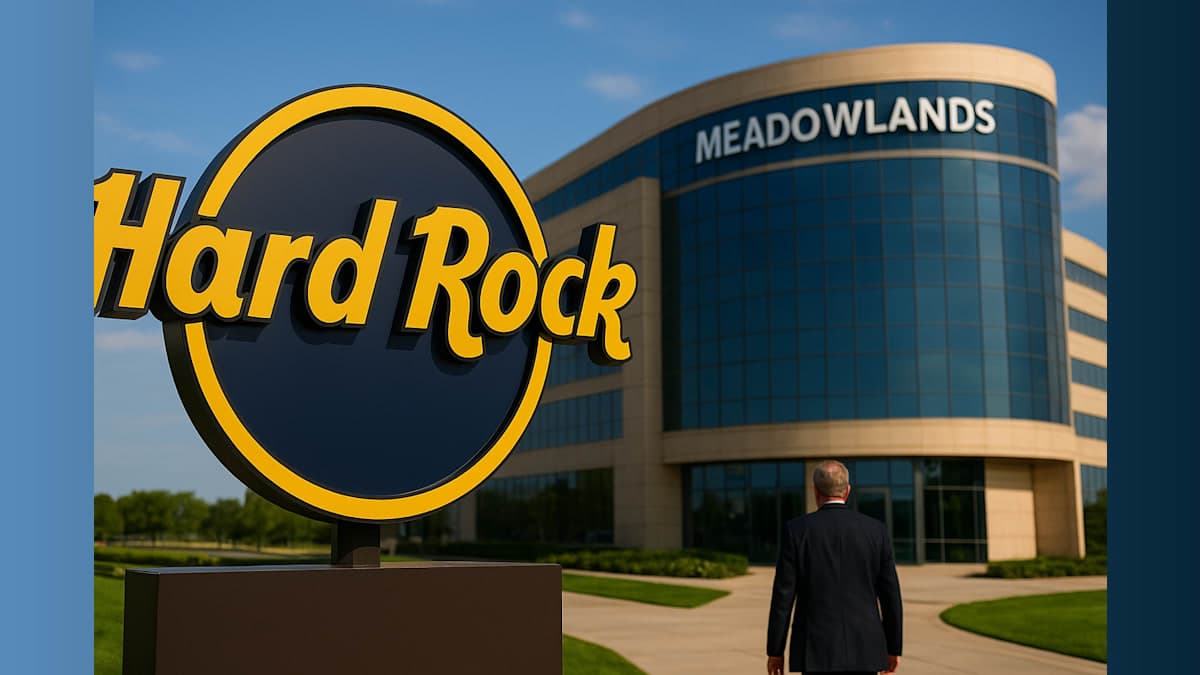
A major shake-up in New Jersey's casino landscape is underway as Hard Rock International exits its long-standing partnership for a proposed casino at the Meadowlands Racetrack. The gaming giant has sold its 50% stake to partner Jeff Gural, whose firm New Meadowlands Racing now holds full control of the project that's been in the works since 2015.
The transaction, completed for an undisclosed sum, comes as debate over expanding gambling beyond Atlantic City resurfaces in Trenton. Lawmakers from Bergen and Monmouth counties are pushing for a new referendum that would allow casinos at the Meadowlands and Monmouth Park—a proposal voters rejected back in 2016.
Atlantic City Remains the Key
For Gural, winning public support for a Meadowlands casino hinges on one critical factor: demonstrating clear benefits for Atlantic City. He's exploring options that could include sharing revenue from a North Jersey casino with the struggling seaside resort.
"I've got to figure out a way to help Atlantic City," Gural said. "That's the key to getting this referendum. We need to show that it would be beneficial to Atlantic City to have a casino in the Meadowlands, and that's what I'm going to work on."
Gural downplayed concerns about direct competition with Atlantic City, emphasizing fundamental differences between the two markets. "Atlantic City is a destination resort," he noted, adding that "The Meadowlands won't be a destination resort; we may not even put a hotel there."
He also acknowledged the broader economic challenges facing Atlantic City. "The city itself is pretty run-down," Gural said. "If you drive through Atlantic City and you go to one of the Boardwalk casinos, you have to drive through depressed areas."
Why Hard Rock Walked Away
Hard Rock's decision to exit the Meadowlands project reflects the company's growing regional footprint and strategic concerns about operating multiple casinos in close proximity. The company already runs Hard Rock Hotel & Casino Atlantic City and has secured approval for a massive new development in New York.
Hard Rock is developing the $8 billion Metropolitan Park casino project in Queens with Mets owner Steve Cohen, adding another major competitor for regional gambling dollars. Jim Allen, chairman of Hard Rock International, suggested the partnership structure at the Meadowlands had become too complex.
"We have looked into the different options," Allen said. "We all know partnerships; if there are too many partners in a deal, it can be hard to navigate."
Interestingly, Allen believes the New York property could actually complement Hard Rock's Atlantic City operations rather than cannibalize them, potentially funneling gambling traffic toward the shore resort. However, he emphasized that Atlantic City's survival depends on coordinated action from state leadership.
"I am optimistic the governor will be serious about realizing that we can no longer kick the can down the road," Allen said, referring to New Jersey Gov. Mikie Sherrill's recent call for a unified revitalization strategy. "If that occurs, we'd love to continue to be here in Atlantic City. But there's a lot of 'ifs' there."
High Stakes for Atlantic City
Industry executives have issued stark warnings about the potential impact of expanded gambling in the region. George Goldhoff, president of the Casino Association of New Jersey, predicted that additional North Jersey casinos alongside new New York developments could force up to six of Atlantic City's nine casinos to close, wiping out between $600 million and $700 million in revenue.
Goldhoff described the potential impact as "a tsunami on top of an earthquake"—a sobering assessment that underscores the high stakes involved in any expansion of gambling beyond Atlantic City.
Gural, however, framed a Meadowlands casino as a defensive strategy to retain New Jersey gamblers who might otherwise head to New York. "New Jersey can allow us to build a casino at the Meadowlands and keep all the people in North Jersey gambling in North Jersey, and allow the people in Manhattan and Chinatown to come to New Jersey," he argued. "They're not going to go to Queens or the Bronx."
As our state grapples with these competing interests, one thing is clear: the future of gambling in New Jersey—and the fate of Atlantic City—hangs in the balance. Whether voters will be willing to reconsider casino expansion in a new referendum remains to be seen, but the conversation is far from over.