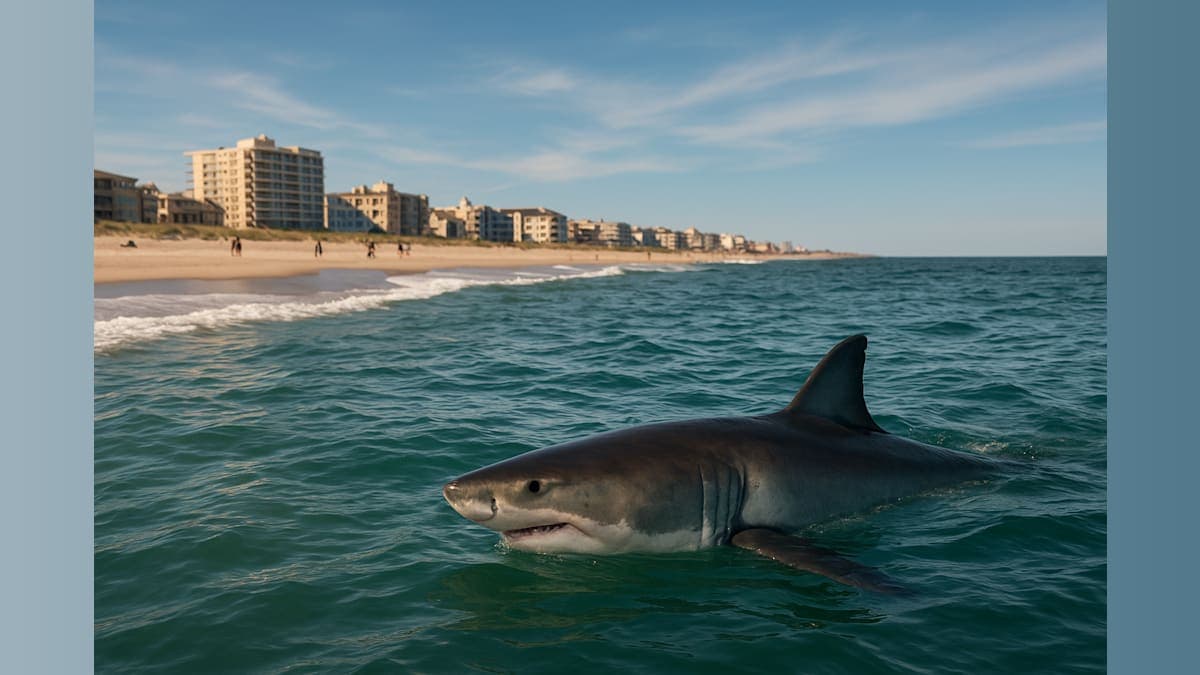
Our coastal waters are once again hosting some impressive visitors. Cross, a juvenile male great white shark weighing approximately 400 pounds and measuring nearly 10 feet long, has arrived off the Jersey Shore, with his satellite tag pinging east of Atlantic City on Monday evening around sunset.
The young shark's appearance marks the continuation of the spring migration pattern that brings great white sharks up from their winter homes along the southeastern coast to the seal-rich waters of New England and Canada. Cross is the third OCEARCH-tagged great white to reach our waters this spring, following Nori and Quint, who have already moved further north on their journey.
Cross carries a bit of maritime history in his name. The non-profit research group OCEARCH captured and tagged him on October 3, 2025, off Nova Scotia and named him after Cross Island in Lunenburg Bay. According to local folklore, early French settlers erected a cross on the island where a lighthouse now stands, serving as both a devotional symbol and a navigational aid for sailors — a fitting namesake for a creature that navigates thousands of miles of ocean.
Since his tagging last fall, Cross has followed the classic migration route of Atlantic great whites. He swam south after being tagged, spending late fall and winter off the coast of the Carolinas, with his furthest point southeast of Savannah, Georgia. In April, he turned north again, joining more than 100 other sharks that OCEARCH is currently tracking along the eastern seaboard.
The tracking technology provides valuable insights into these magnificent predators. When Cross surfaces, the SPOT tag on his dorsal fin transmits a signal to satellites, creating a "ping" that researchers can map. This data helps scientists understand shark migration patterns, identify essential habitats, and inform conservation efforts to protect the species.
Cross isn't traveling alone. Ripple, a larger male weighing 778 pounds and measuring 11 feet, 6 inches long, has just entered Virginia waters and could be the next shark to reach New Jersey. Meanwhile, Nori has already completed her northward journey, pinging on Monday near Mahone Bay in Nova Scotia where she was tagged last October. Quint was last detected near the Rhode Island Sound about a week ago.
The Jersey Shore is also welcoming back another familiar face from the sea. Wassaw Will, a female loggerhead turtle, has returned to Delaware Bay. This remarkable creature was first tagged in 2010 and was captured again last year in the Wassaw National Wildlife Refuge in Georgia, almost exactly one year ago. The Archie Carr Center for Sea Turtle Research, in partnership with the Caretta Research Project, tagged her, and OCEARCH monitors her movements through their shark tracker app.
Wassaw Will is a prolific nester, typically laying five or six nests annually. Over her lifetime, she has produced 31 documented nests containing 2,845 eggs, with 2,184 successfully hatching. Though at least three nests have been lost to storms or tidal surge, her contribution to the loggerhead population is significant. Her satellite tag shows she spent last summer and part of fall in Delaware Bay before making a long, slow swim south to Wilmington, North Carolina for the winter.
For more than a dozen years, OCEARCH has been collecting biological data and tracking migration routes to better understand the life cycles of ocean apex predators. The organization's global shark tracker allows anyone to follow these animals in near real-time, connecting our community to the remarkable wildlife that shares our coastal waters.
As Cross continues his journey north toward his summer feeding grounds, his presence off our coast serves as a reminder of the rich marine ecosystem that thrives just beyond our beaches. These annual migrations have been happening for millennia, and thanks to modern tracking technology, we can now witness and appreciate these ancient patterns in ways previous generations never could.