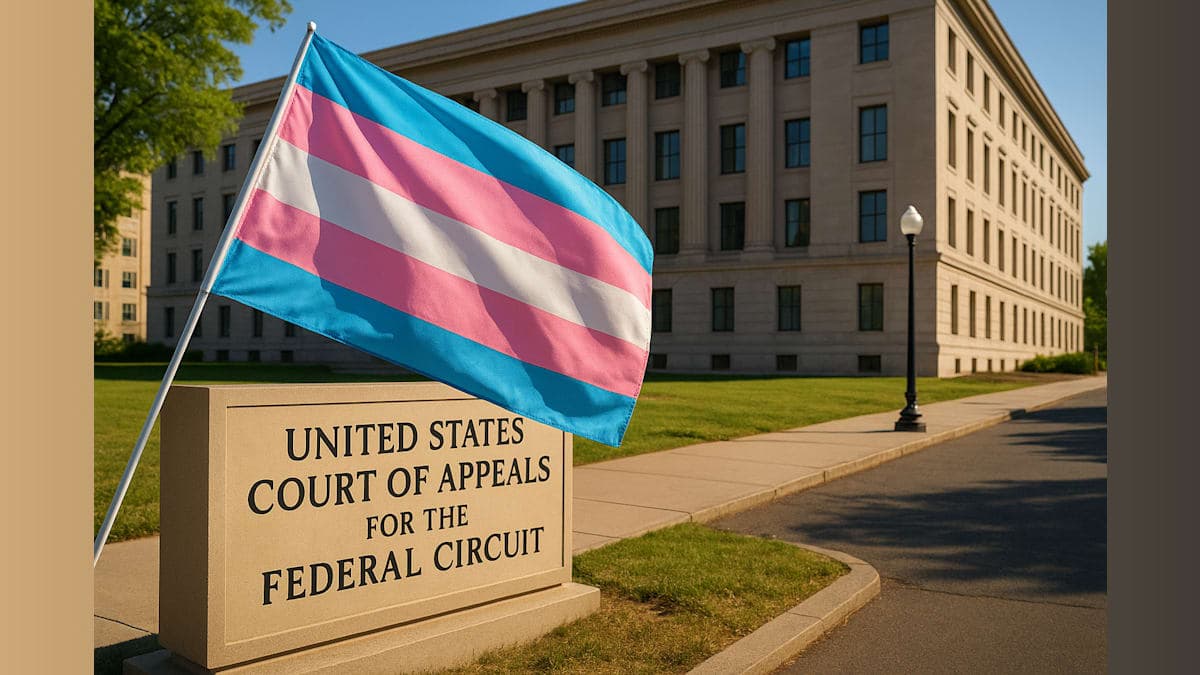
A Pentagon policy that banned transgender troops from military service violated the law, a divided panel of federal appeals court judges ruled on Monday, delivering another legal setback to President Donald Trump's sweeping agenda.
The majority opinion from a three-judge panel of the U.S. Court of Appeals for the District of Columbia circuit held that the Trump administration's policy was designed to exclude people from the military based on their gender identity. However, the ban remains in effect, as the U.S. Supreme Court allowed the Pentagon to begin enforcing it last year while litigation continues.
The panel's ruling would prevent the military from discharging current service members named in the lawsuit but would not permit new transgender recruits to join. The judges placed their decision on hold to allow the administration to seek further review from higher courts.
Background of the Legal Challenge
The appeals court panel's 2-1 decision partially upholds a March 2025 ruling by U.S. District Judge Ana Reyes in Washington, D.C. Judge Reyes concluded that Trump's executive order to exclude transgender troops from military service likely violates their constitutional rights.
The administration appealed after Judge Reyes issued a preliminary injunction requested by attorneys for several transgender people who are active-duty service members and others seeking to join the military. The appeals court's majority determined that the injunction should be narrowed to apply only to the plaintiffs currently serving in the military, not those attempting to enlist.
A separate lawsuit challenging the ban was filed in Washington state and resulted in a ruling favoring the plaintiffs in that case, though the Supreme Court has blocked that decision as well.
The Executive Order and Pentagon Policy
In January 2025, President Trump signed an executive order claiming that the sexual identity of transgender service members "conflicts with a soldier's commitment to an honorable, truthful, and disciplined lifestyle, even in one's personal life" and is harmful to military readiness.
Following the executive order, Defense Secretary Pete Hegseth issued a policy that presumptively disqualifies people with gender dysphoria from military service. Gender dysphoria is the distress that a person feels because their assigned gender and gender identity do not match. The medical condition has been linked to depression and suicidal thoughts.
The policy "appears to be driven by the bare desire to harm a politically unpopular group: persons who identify as transgender," Judge Robert Wilkins wrote for the majority. Judge Wilkins was nominated to the court by Democratic President Barack Obama.
Reactions and Next Steps
Jennifer Levi, senior director of transgender and queer rights at GLAD Law, applauded the ruling. "Today's decision is a powerful vindication of the plaintiffs' extraordinary courage and unwavering commitment to their country," Levi said.
The Pentagon did not immediately respond to a request for comment. Defense Secretary Pete Hegseth indicated that an appeal was forthcoming in a social media post that used an abbreviation for the Supreme Court: "See you at SCOTUS."
In a dissenting opinion, Judge Justin Walker argued that judges lack the power to second-guess the decision to exclude transgender troops. "We have neither the expertise nor the authority to decide whether the military can exclude the plaintiffs from its ranks. The Constitution assigns that authority to Congress and the Commander in Chief," wrote Judge Walker, who was nominated by President Trump, a Republican.
Judge Judith Rogers, who was nominated by Democratic President Bill Clinton, joined Judge Wilkins' majority opinion but also partially dissented. Judge Rogers wrote that she would also have allowed new transgender recruits named in the lawsuit to join.