
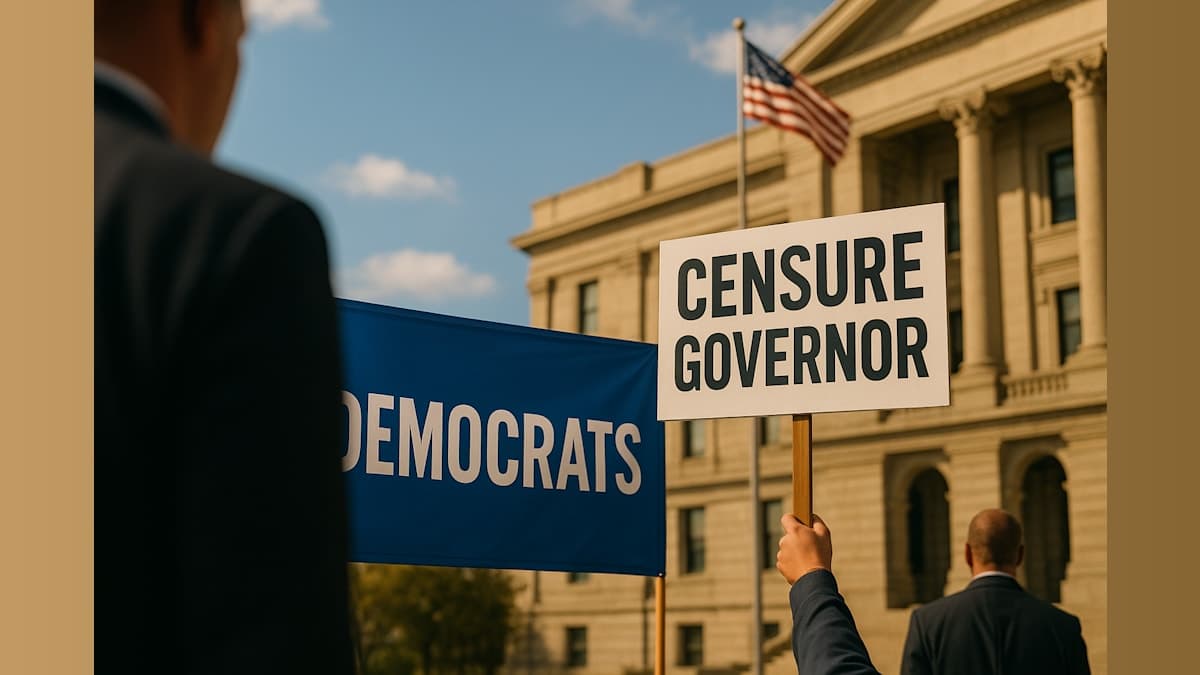
In an extraordinary rebuke of their own party's leader, the Colorado Democratic Party voted Thursday to formally censure Governor Jared Polis over his controversial decision to commute the prison sentence of Tina Peters, a former county clerk convicted of crimes related to promoting false 2020 election claims.
The censure represents a significant fracture within Colorado's Democratic establishment, with party members taking the rare step of publicly condemning their sitting governor. Such formal rebukes are typically reserved for the most serious breaches of party values or conduct deemed harmful to the party's mission and credibility.
Tina Peters gained national attention as a central figure in efforts to undermine confidence in the 2020 presidential election results. Her conviction stemmed from a plot that advanced debunked claims about election fraud, making her a polarizing figure in Colorado politics. The governor's decision to grant her clemency through sentence commutation has ignited fierce debate about accountability, justice, and the appropriate use of executive power.
The censure vote signals deep dissatisfaction among Democratic Party members who view the commutation as undermining efforts to hold accountable those who participated in schemes to overturn legitimate election results. For many Democrats, Peters represents a direct threat to democratic institutions, and any leniency toward her conviction sends a troubling message about the consequences of election-related crimes.
Governor Polis has faced mounting criticism from within his own party since announcing the commutation. While governors possess broad clemency powers, the exercise of such authority in high-profile, politically sensitive cases often carries significant political risk. The formal censure by the state party apparatus represents an escalation of that internal conflict and raises questions about the governor's standing within Colorado Democratic circles.
The controversy arrives at a critical moment for Colorado politics, as the state continues to navigate the aftermath of election-related tensions and debates over election security. The censure of a sitting governor by his own party is virtually unprecedented in recent Colorado history and underscores the depth of division over how to address those convicted of election-related offenses.
As the political fallout continues, the incident serves as a stark reminder of the enduring consequences of the 2020 election disputes and the challenges facing political leaders who must balance mercy, justice, and party loyalty in an increasingly polarized environment.