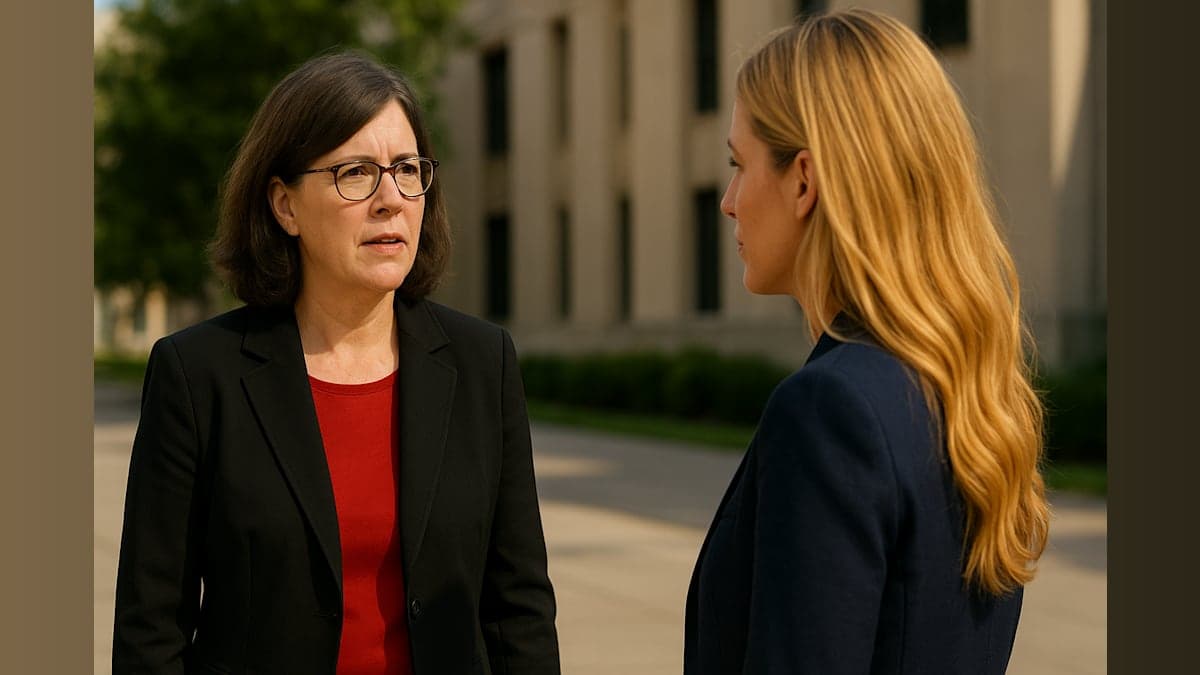
The architect of California's landmark survivor-protection law has entered the public discourse surrounding Blake Lively's legal battle with Justin Baldoni, expressing concern that the legislation is being applied in ways that diverge from its original intent.
Victoria Burke, who drafted the California statute designed to shield survivors of sexual assault and harassment from retaliatory defamation lawsuits, appeared on "The Megyn Kelly Show" on Tuesday, June 2, 2026, to articulate her reservations about how the law is being invoked in the high-profile entertainment industry dispute.
Burke's criticism centers on what she characterizes as a misapplication of the law's protective provisions. According to her analysis, the legislation was never designed to categorically prevent defamation claims from individuals who assert they have been falsely accused. Rather, the statute was crafted with a more nuanced purpose: to protect those who come forward with allegations of sexual assault, harassment, and discrimination from facing legal retaliation for speaking about their experiences.
The genesis of the law itself emerged from Burke's personal experience. She developed the legislation after discovering that survivors could face defamation lawsuits simply for publicly discussing their own sexual assaults. This revelation prompted her to undertake an extensive research effort, spending more than a year examining lawsuits filed against survivors before presenting her proposal to California lawmakers.
The legislative process involved careful calibration to balance competing interests. Burke worked with advocacy organizations and the American Civil Liberties Union to refine the bill's language, ensuring it would protect survivors while preserving legitimate legal recourse for those claiming false accusations. She cited the Johnny Depp-Amber Heard defamation case as an illustration of litigation that she believes could still have proceeded under the law's framework, demonstrating that the statute was not intended to eliminate all defamation claims.
Burke expressed surprise at seeing her legislation invoked in the contentious legal conflict between Lively and Baldoni, stating that the law's fundamental purpose appears to be obscured in its current application. Her public commentary adds significant weight to the ongoing debate, particularly given her unique position as the law's author and her intimate understanding of its intended scope and limitations.
The intervention by Burke represents a rare instance of a lawmaker publicly critiquing how their own legislation is being utilized in court. Her concerns raise broader questions about how protective statutes designed for vulnerable populations can be interpreted and applied in complex legal disputes involving public figures with substantial resources and legal representation.
As the Lively-Baldoni legal battle continues to unfold, Burke's perspective offers critical context about the legislative intent behind one of California's key survivor-protection measures. Her commentary underscores the ongoing tension between protecting those who report misconduct and preserving the ability of individuals to defend their reputations against allegations they claim are false.

About the Author
Ava Hart
Ava Hart is a pop culture junkie and loves to share what's happening in Hollywood and what trends are taking the world by storm.