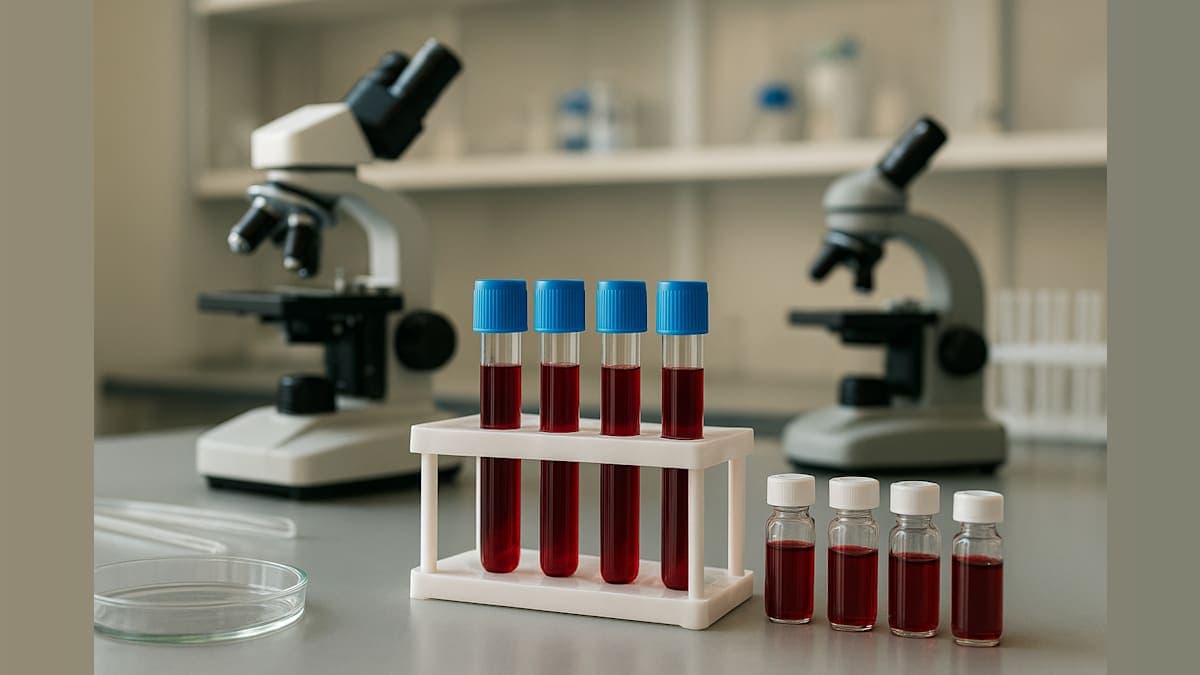
Human blood may possess far greater anti-aging capabilities than previously understood, according to two separate studies published within months of each other. The research suggests the bloodstream functions not merely as a transport system, but as an active defense mechanism against cellular aging.
The findings center on two distinct discoveries: a bacterium residing in human blood that produces protective compounds for skin cells, and a method for reversing aging in blood stem cells demonstrated in laboratory mice. While neither breakthrough has resulted in available treatments, both are fundamentally altering the trajectory of anti-aging research.
Bacterial Compounds Show Protective Effects
The bacterium Paracoccus sanguinis has existed in human blood long before scientists identified it in 2015. A study published in the Journal of Natural Products in May 2025 revealed that this bacterium produces three compounds with protective effects on human skin cells during laboratory testing. Two of these compounds had never been documented before.
When researchers applied the compounds to skin cells under stress conditions, the results demonstrated reduced reactive oxygen species, which are associated with inflammation. The compounds also decreased levels of two inflammatory proteins and inhibited MMP-1, an enzyme responsible for breaking down collagen.
One compound, designated metabolite 11, emerged as the most effective and represents the strongest candidate for future anti-aging applications, according to researchers. The National Research Foundation of Korea, the BK21 FOUR Project, and the National Supercomputing Center funded the research.
Stem Cell Aging Proves Reversible
The second study, conducted at Mount Sinai's Icahn School of Medicine, addressed blood stem cell aging through a different mechanism. Dr. Saghi Ghaffari and his research team discovered that stem cells, which generate all blood cells, age partially due to dysfunction within the lysosome, a cellular structure that functions as a recycling center.
In aged mice, lysosomes within these stem cells became excessively acidic, sustained damage, and began operating abnormally. When researchers corrected this dysfunction, the aged stem cells regained youthful characteristics. They recovered their regenerative capacity, and inflammation associated with aging decreased.
"Our findings reveal that aging in blood stem cells is not an irreversible fate. Old blood stem cells have the capacity to revert to a youthful state; they can bounce back," Ghaffari stated in a Mount Sinai press release. The study appeared in Cell Stem Cell in November 2025, with funding from the National Institutes of Health, New York State Stem Cell Science, INSERM, and the Agence Nationale de la Recherche.
Clinical Applications Remain Years Away
Despite the promising laboratory results, neither discovery has progressed to human testing or commercial availability. The bacterial compounds have been evaluated only in isolated cells, not in actual human skin. No products currently on the market contain these compounds, regardless of marketing claims that may suggest otherwise. Should metabolite 11 advance to development, the process would likely require years of additional research and regulatory approval.
The stem cell findings carry implications beyond cosmetic applications. Researchers indicate the discoveries could eventually contribute to preventing age-related blood disorders, improving stem cell transplant outcomes, and enhancing gene therapy safety for older patients. Ghaffari's team is investigating whether similar lysosome dysfunction contributes to leukemia, which increases in prevalence with age.
Current Best Practices Unchanged
Both studies remain firmly in the research phase and do not alter current evidence-based approaches to skin health and aging. Adequate sleep, proper nutrition, sun protection, and inflammation management continue to represent the most effective available strategies.
The research does, however, signal a significant shift in scientific perspective. Where blood was once viewed primarily as a circulatory mechanism, researchers are now examining its potential as an active participant in cellular maintenance and age resistance. The findings suggest that understanding what occurs within the bloodstream may prove central to developing future anti-aging interventions.

About the Author
Ava Hart
Ava Hart is a pop culture junkie and loves to share what's happening in Hollywood and what trends are taking the world by storm.