
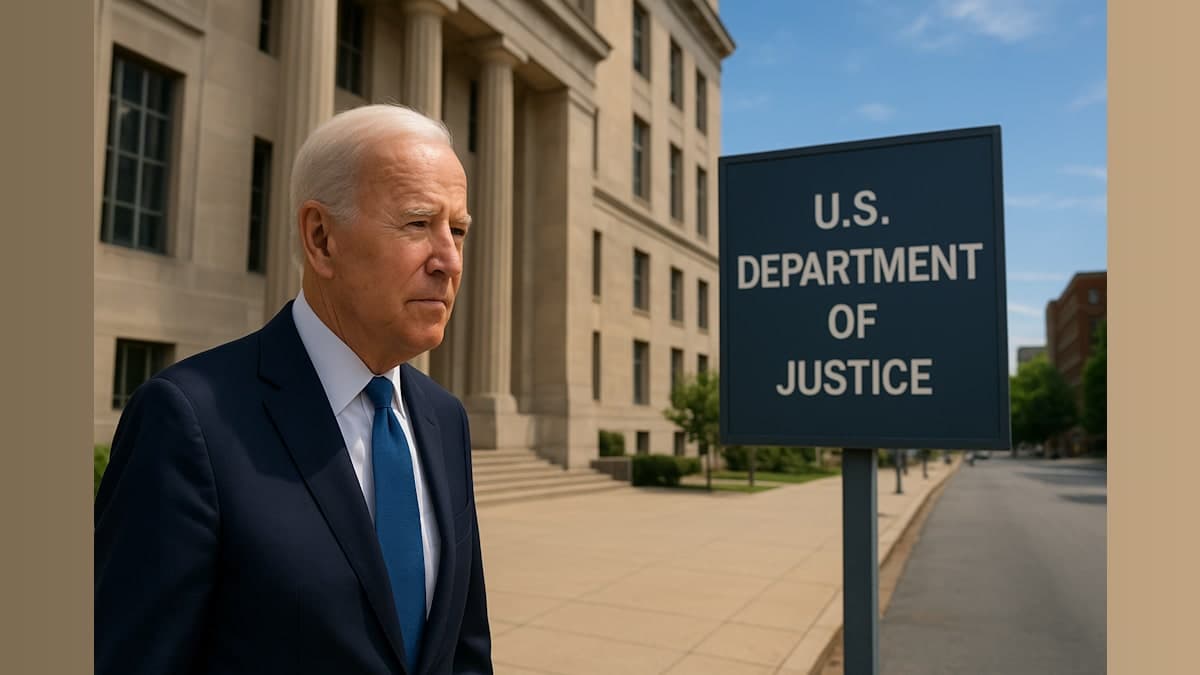
Former President Joe Biden has taken legal action against the Justice Department in an effort to block the release of sensitive audio recordings and transcripts obtained during a special counsel investigation into his handling of classified documents.
The lawsuit, filed Tuesday in Washington's federal court, challenges the Justice Department's plans to release files from Biden's interviews with Mark Zwonitzer, a ghostwriter who collaborated with Biden on his two memoirs. The interviews took place at Biden's home in 2016 and 2017.
According to Biden's legal team, the Justice Department intends to provide the materials to Congress and the Heritage Foundation, a conservative organization. This represents a significant reversal from the department's previous position that the files were exempt from disclosure under public records law.
The lawsuit argues that releasing the recordings would "constitute an unwarranted invasion of President Biden's privacy." Biden's attorneys emphasized the fundamental privacy rights at stake, writing: "Every American, including a sitting or former Vice President, has a right to privacy in the personal conversations he has within his own home. And when the U.S. Department of Justice obtains that private information through a criminal investigation, the Department bears a particular responsibility to protect it from disclosure."
The contested materials were examined by special counsel Robert Hur during his investigation into Biden's retention of classified documents from his tenure as senator and vice president. Hur's yearlong investigation culminated in a 345-page report that questioned Biden's age and mental competence but ultimately recommended no criminal charges against the then-81-year-old, citing insufficient evidence to successfully prosecute the case.
This legal battle represents the latest chapter in Biden's ongoing efforts to shield certain materials from public release. The former president previously fought to prevent disclosure of audio from his interview with Hur himself. In 2024, the House voted to hold Biden Attorney General Merrick Garland in contempt of Congress after he refused to turn over that audio following the White House's assertion of executive privilege.
While transcripts of Biden's five-hour interview with federal prosecutors were released in 2024, the audio recordings have remained protected. Those transcripts revealed that Biden insisted he treated classified information seriously, though he appeared uncertain about dates and details at times and acknowledged unfamiliarity with the paper trail for some sensitive documents he handled.
The case has become a flashpoint in partisan debates over the handling of classified materials. Republicans have contended that Biden received preferential treatment from his own Justice Department, contrasting his case with the criminal prosecution of former President Donald Trump, who faced charges for allegedly refusing to return classified documents from his Florida estate that were requested by the National Archives.
Democrats have countered by highlighting Biden's cooperation throughout the investigation, drawing a sharp distinction between his conduct and the allegations against Trump in the separate criminal case.
The lawsuit underscores the complex intersection of privacy rights, government transparency, and political accountability in cases involving former high-ranking officials. The outcome could establish important precedents regarding the disclosure of materials obtained during criminal investigations of public figures.