
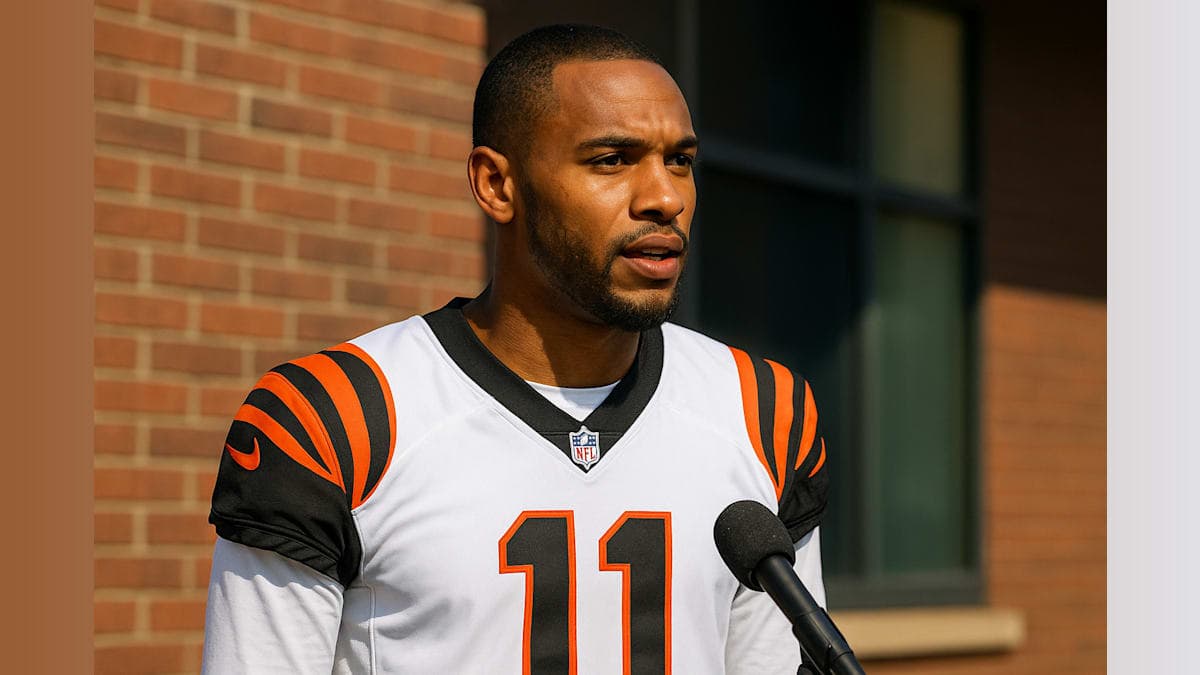
Cincinnati Bengals wide receiver Andrei Iosivas has opened up about the psychological toll of social media harassment, revealing that online abuse penetrated his mental defenses during a challenging previous season.
In candid remarks, Iosivas admitted that the relentless criticism from online sources "got in my head a little bit" as he navigated performance difficulties on the field. The acknowledgment highlights a growing concern across professional sports regarding the intersection of athlete mental health and the unfiltered nature of social media platforms.
The receiver indicated that his approach moving forward centers on tuning out what he characterized as "outside noise." This strategic shift in mindset represents a deliberate effort to insulate himself from external pressures that proved detrimental to his performance and well-being during the previous campaign.
The issue of online harassment directed at professional athletes has intensified in recent years, with players across all major sports leagues reporting increased volumes of abusive messages, particularly following perceived poor performances. The anonymity afforded by social media platforms has emboldened critics to deliver harsh, often personal attacks that extend beyond legitimate sports commentary.
For the Bengals organization, Iosivas's willingness to discuss these challenges publicly may signal a broader conversation about player support systems and mental health resources. Professional sports franchises have increasingly recognized the need to provide athletes with tools to manage the psychological demands that accompany public scrutiny in the digital age.
As Iosivas prepares for the upcoming season with a renewed focus on internal motivation rather than external validation, his experience serves as a reminder of the human element behind professional athletics. The ability to compartmentalize criticism while maintaining competitive drive represents a crucial skill for modern athletes navigating an increasingly connected and often hostile online environment.
The receiver's commitment to filtering out negativity may prove instrumental in his development as he seeks to establish himself as a consistent contributor to the Bengals' offensive scheme. Whether this mental adjustment translates to improved on-field production remains to be seen, but the acknowledgment of past struggles represents an important step in the maturation process for the young player.