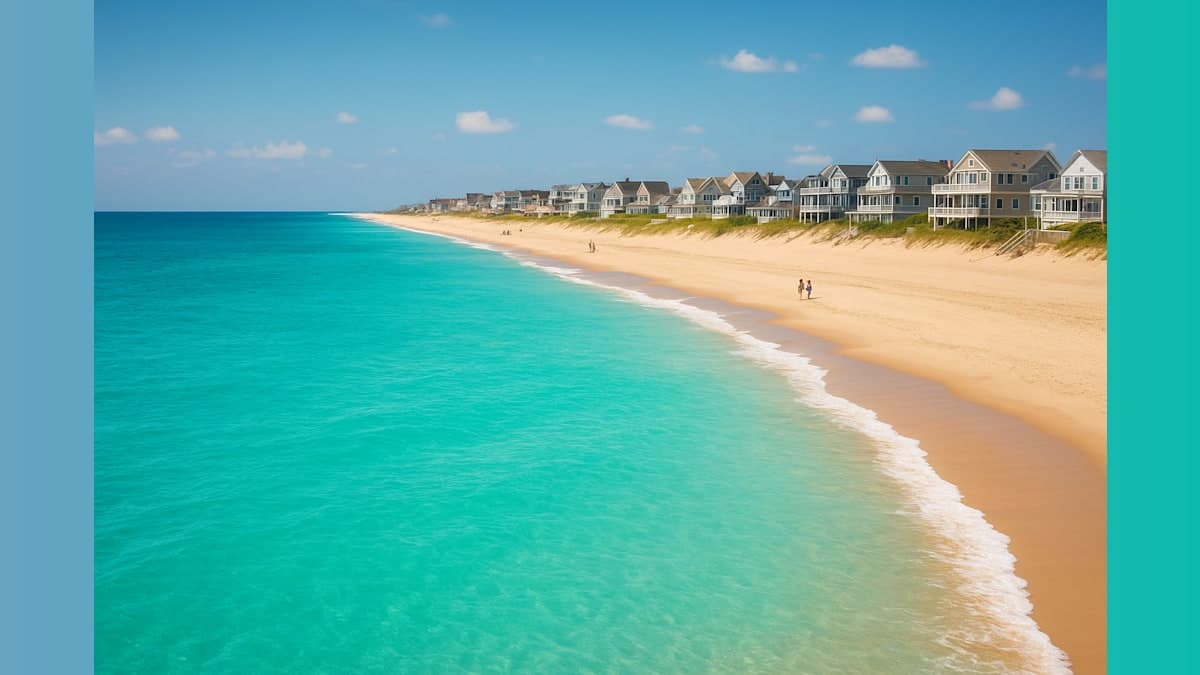
Our coastline is putting on quite a show this spring. If you've noticed the ocean looking unusually bright and tropical lately, you're not imagining things — satellite imagery from NASA confirms that the Atlantic Ocean along the Jersey Shore and surrounding areas has transformed into a stunning turquoise blue, reminiscent of Caribbean waters.
The dramatic color change began in early April, when satellites started detecting patches of brownish, blue-green water lingering off the coasts of New Jersey, Delaware, Maryland and Virginia. What started as subtle shifts has evolved into one of the most visually striking displays the region has seen in recent memory, according to NASA's Earth Observatory and Goddard Space Flight Center.
The Science Behind the Spectacle
The vibrant colors aren't just beautiful — they tell a fascinating story about ocean ecology. Scientists say the blue waters come from phytoplankton, microscopic plant-like organisms that float near the ocean's surface. When sunlight hits chlorophyll inside dense concentrations of these organisms, the water reflects bright blue and turquoise tones visible from aircraft and orbiting satellites.
The bloom appears most intense in the shallow coastal zone where the waters of Raritan Bay, Delaware Bay and Chesapeake Bay merge with the Atlantic Ocean — an area known as the Mid-Atlantic Bight. This region, stretching between Cape Hatteras, North Carolina, and Martha's Vineyard, Massachusetts, experiences coastal phytoplankton blooms in winter and summer, though the timing and size varies from year to year.
What makes this year's bloom particularly remarkable is the perfect combination of spring sunlight, nutrient-rich waters and seasonal ocean upwelling. As phytoplankton multiply rapidly in these ideal conditions, chlorophyll absorbs portions of sunlight while reflecting blue-green wavelengths, producing the glowing turquoise effect now visible across our coastline.
A Rare Tropical Look for Our Waters
The Mid-Atlantic coast isn't typically known for Caribbean-like water. In fact, scientists consider our region "noisy" or "dirty" because rivers often discolor coastal waters with plumes of suspended sediment, water stained with colored dissolved organic matter and an array of microscopic and aquatic plant life. The ocean off New Jersey typically appears darker green or gray because of sediment, algae and changing light conditions.
That's what makes this transformation so striking. Locals and visitors are comparing our coastline to tropical destinations like the Caribbean and the Bahamas. Satellite imagery shows enormous swirling patches offshore, creating patterns that rival any postcard-perfect beach destination.
Last year's bloom turned water in the Atlantic and Cape May counties a bright blue for several weeks before disappearing, according to NASA. "The colors are caused by light interacting with high concentrations of phytoplankton near the surface," scientists explained in NASA observations of the event.
Safe for Swimming and Recreation
Good news for beachgoers: the bloom poses little danger to those on the water, including swimmers, surfers and beach visitors, officials said. Phytoplankton form the foundation of the marine food chain and are essential to ocean ecosystems. Similar blooms happen every spring as temperatures rise and sunlight increases.
However, scientists note that extremely large blooms can sometimes create temporary stress on marine life if massive amounts of phytoplankton die off at once. When algae dies and sinks to the ocean floor, it is consumed by bacteria. This process consumes oxygen in the water and if the levels drop too low, it can stress and potentially kill fish and shellfish, according to researchers. These impacts tend to be very limited and short-lived.
How Long Will It Last?
Oceanographers with Rutgers University said the bloom will likely fade once available nutrients in surface waters are depleted. Unless storms, river runoff or additional upwelling replenish those nutrients, the tropical appearance will dissipate within weeks as ocean conditions return to normal.
For now, though, our community has a front-row seat to one of nature's most beautiful displays — just in time for peak tourism season. If you've been planning a beach day, this might be the perfect time to experience our coastline looking more like a tropical paradise than ever before.