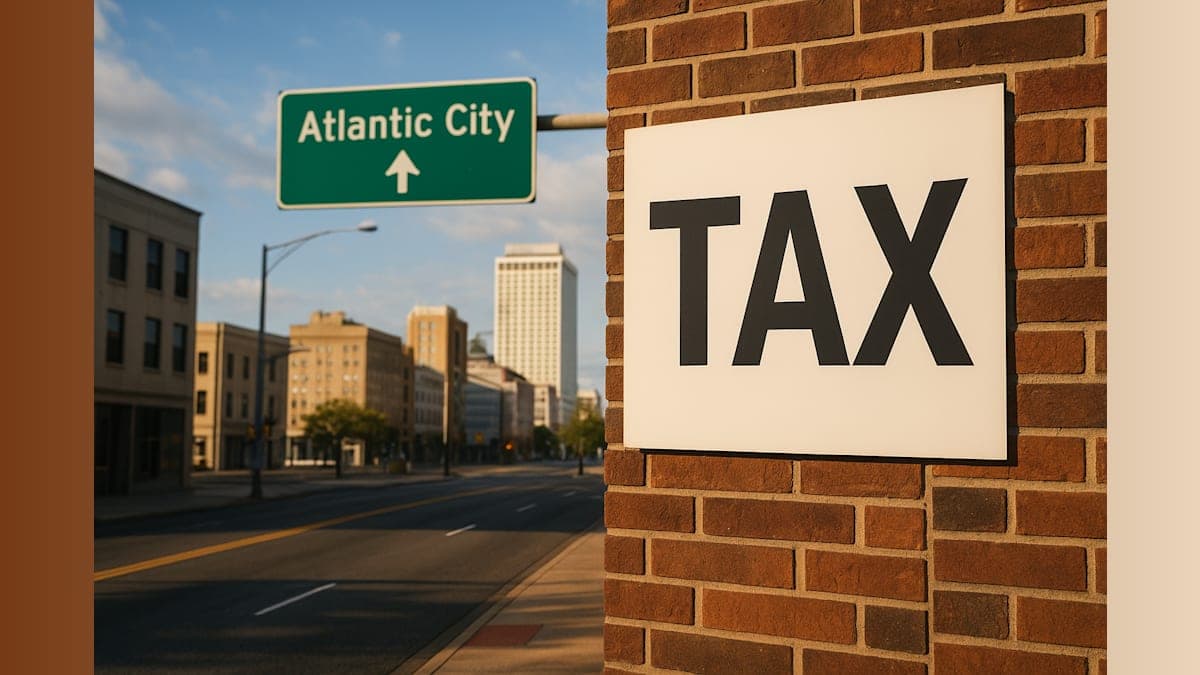
Our community is about to experience its first property tax increase in seven years, but local officials want residents to understand where the decision came from—and it wasn't City Hall.
Atlantic City Mayor Marty Small had proposed a budget that would have delivered a 2.3-cent property tax decrease for next year, continuing an unprecedented streak of tax relief. Instead, the state of New Jersey stepped in and mandated a two percent property tax increase, overriding the city's plans.
A Record of Tax Relief
The context matters here. According to the New Jersey Department of Community Affairs, Atlantic City has led the entire state from 2020 through 2026 in reducing property taxes, cutting them by 13.7 cents over the past six years under Mayor Small's leadership. That's a remarkable achievement for any municipality, let alone one navigating the economic complexities of a casino town.
The mayor's original budget proposal would have marked the seventh consecutive year of tax decreases—a streak now interrupted not by local spending decisions, but by state requirements.
Why the State Intervened
Mayor Small recently attended a meeting with state officials, accompanied by multiple members of the Atlantic City Council. During those discussions, the state made clear its position: a two-cent property tax increase would be required.
Faced with this mandate, Small and the council determined this wasn't the right battle to wage with Trenton. The mayor has cultivated what sources describe as a close and collegial working relationship with the state of New Jersey over the years, with state officials supporting nearly every measure the mayor has pursued. Risking that partnership over a relatively modest tax adjustment didn't make strategic sense.
What This Means for Residents
While any tax increase is unwelcome news, the two-cent hike represents a relatively small adjustment after years of reductions. For homeowners who've benefited from six straight years of decreasing tax bills, this reversal—though disappointing—comes in the context of substantial long-term savings.
The situation also highlights the complex relationship between municipal and state government in New Jersey, where local budget decisions don't always rest entirely with local officials. Atlantic City, like other municipalities, must navigate state oversight while trying to deliver the best outcomes for residents.
As we move forward, the question becomes whether this represents a one-time adjustment or signals a shift in the city's fiscal trajectory. Given the administration's track record of tax reduction and the state's role in this particular decision, residents will be watching closely to see if Atlantic City can return to its pattern of tax relief in future budget cycles.