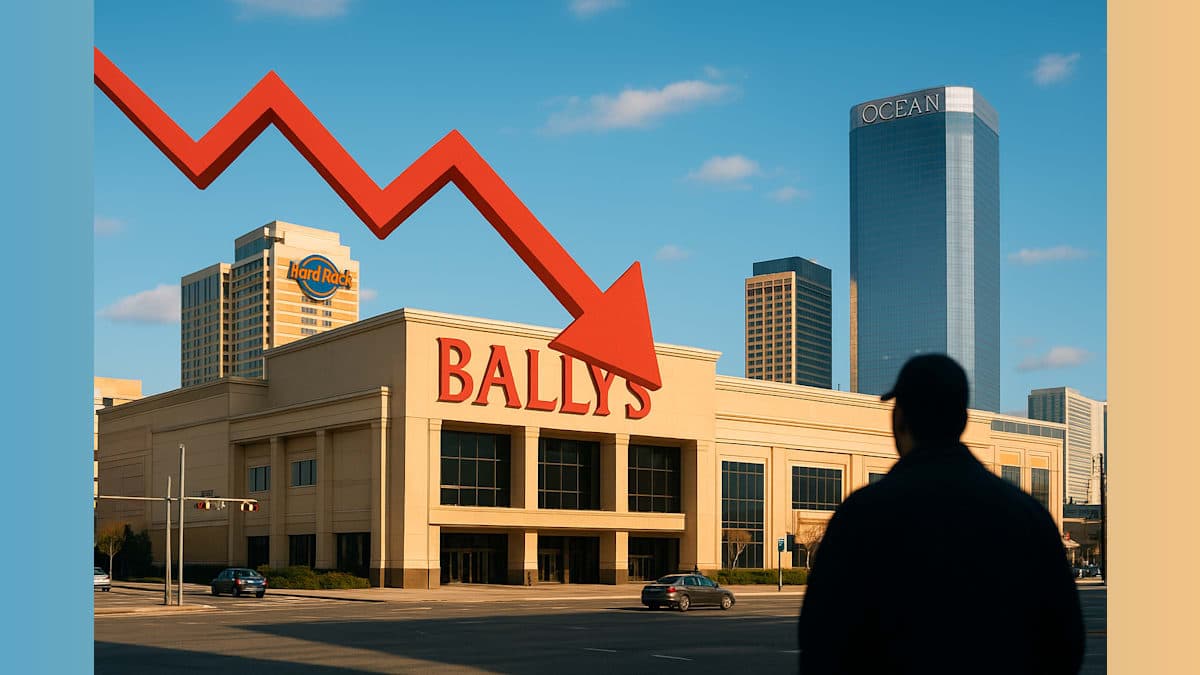
Our Atlantic City casino industry is feeling the squeeze. Despite collecting slightly more revenue in 2025, the profitability that keeps our Boardwalk resorts running is shrinking, raising concerns about what the future holds for New Jersey's gaming capital.
The New Jersey Division of Gaming Enforcement released figures today showing that while the nine casino resorts managed to grow net revenue by 0.6% to $3.24 billion in 2025, gross operating profits actually declined 1.4% to $665.42 million. That gap between revenue and profit tells a story our community knows well: it's getting more expensive to operate these massive resort properties.
Bally's Struggles Continue
The most troubling news comes from Bally's, the only casino in town to post an actual operating loss. The Boardwalk property saw its operating profit crash 210% to a net operating loss of $2.8 million—a stark reversal despite completing a $100 million refresh in 2024.
For those of us who've watched Atlantic City's ups and downs over the decades, Bally's situation raises uncomfortable questions. The property's parent company, Bally's Corporation, is heavily invested in the $4 billion Bally's Bronx development in Ferry Point Park. If an Atlantic City casino were to close, industry observers suggest Bally's would be the most likely candidate.
Winners and Losers
The profit picture varied dramatically across our casino landscape. Borgata maintained its position as the market leader by a wide margin, generating a gross operating profit of $237.4 million—a healthy 14% increase year-over-year. MGM Resorts' flagship property continues to set the standard for the market.
Golden Nugget emerged as the biggest percentage winner, with profits surging 57% to $28.3 million, largely driven by its robust online gaming business. This demonstrates how digital platforms are becoming increasingly critical to casino success.
However, several major properties saw profits decline. Caesars' operating result dropped 40% to $34.1 million, Tropicana's profit fell 25% to $61.8 million, and Harrah's bottom line decreased 12% to $56.5 million.
Economic Headwinds and New Competition
The challenges facing our casino industry extend beyond the Boardwalk. The US Bureau of Economic Analysis reported today that inflation-adjusted consumer spending was flat in February, and ongoing international tensions are expected to further pressure household budgets in the coming months.
Perhaps more concerning for Atlantic City's long-term prospects is the looming competition from downstate New York, where three new casinos are set to open in the coming years. These properties will directly compete for the New York metropolitan area customers who have traditionally driven to our shore.
The final quarter of 2025 painted a particularly gloomy picture, with casino profits dropping 7.1% despite a 2% improvement in net revenue. This widening gap between what casinos take in and what they keep underscores the mounting operational pressures.
Hotel Occupancy Trends
Atlantic City's 15,424 casino hotel rooms were occupied 71.2% of available nights in 2025, down slightly from 72% in 2024. The average nightly rate also declined from $178 to $175.
These figures represent a significant shift from pre-pandemic 2019, when occupancy rates reached nearly 79%—though rooms were considerably cheaper at $142 per night. The data suggests our casinos are charging more but attracting fewer guests, a troubling combination for long-term sustainability.
What This Means for Our Community
For those of us who live and work in Atlantic City, these numbers represent more than just corporate balance sheets. The casino industry remains the backbone of our local economy, providing thousands of jobs and supporting countless businesses throughout the region.
As economic pressures mount and new competition emerges, our community may need to prepare for significant changes to the Atlantic City casino landscape. The question isn't whether change is coming—it's how we'll adapt to ensure our shore remains a vibrant destination for generations to come.