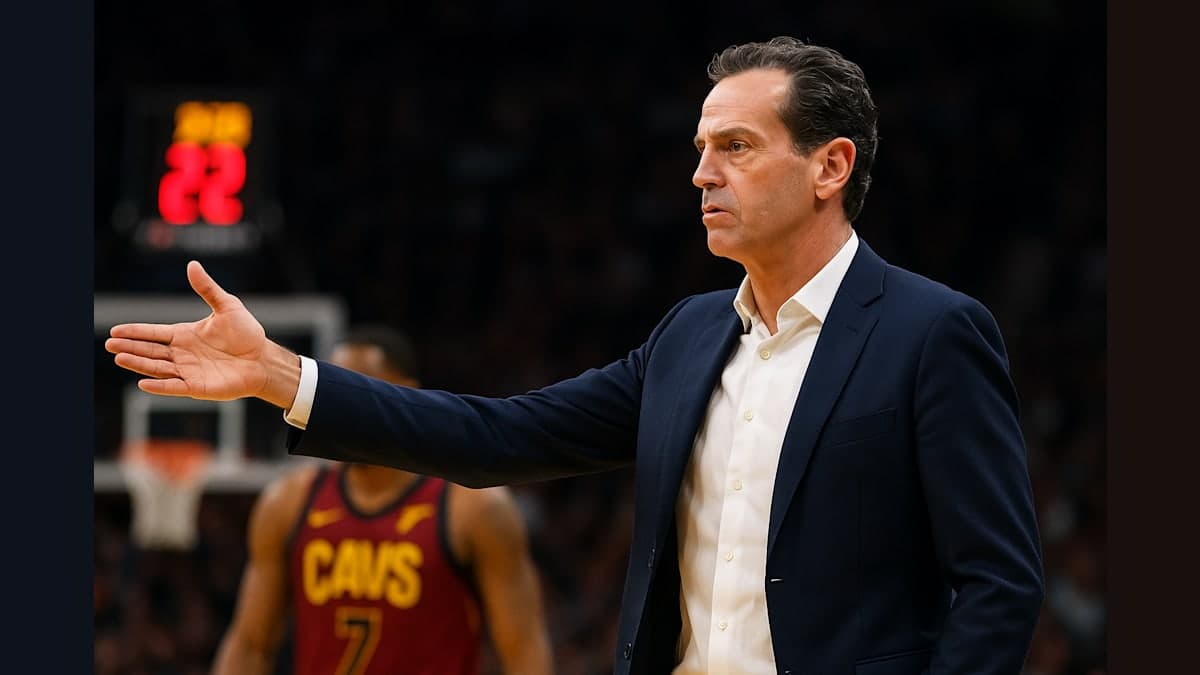
Cleveland Cavaliers head coach Kenny Atkinson found himself defending a controversial strategic decision following Tuesday's dramatic turn of events in the Eastern Conference Finals opener against the New York Knicks.
The Cavaliers squandered a commanding 22-point lead in the final minutes of the fourth quarter, yet Atkinson elected to preserve his remaining timeouts rather than use them to halt the Knicks' momentum. The decision has sparked debate among basketball analysts and fans alike about timeout management in critical playoff situations.
Atkinson defended his approach in the aftermath, standing firm on his timeout strategy even as the lead evaporated during the game's decisive stretch. The coach's rationale centers on a broader philosophy about when and how to deploy timeouts during high-pressure playoff moments.
The collapse represents a significant setback for the Cavaliers, who appeared to have firm control of the contest before the Knicks mounted their late-game surge. Timeout management has long been a subject of strategic debate in basketball, with coaches weighing the benefits of stopping opponent momentum against preserving timeouts for late-game execution.
Critics of Atkinson's approach argue that timeouts serve precisely this purpose—to disrupt opposing runs and allow teams to regroup during critical junctures. Proponents of his strategy suggest that calling timeouts can sometimes prove counterproductive, potentially disrupting a team's own rhythm or providing opponents additional time to strategize.
The Eastern Conference Finals matchup between the Cavaliers and Knicks promises to be a closely contested series, and Tuesday's opener demonstrated the razor-thin margins that often define playoff basketball. How Atkinson adjusts his approach in subsequent games may prove crucial to Cleveland's championship aspirations.