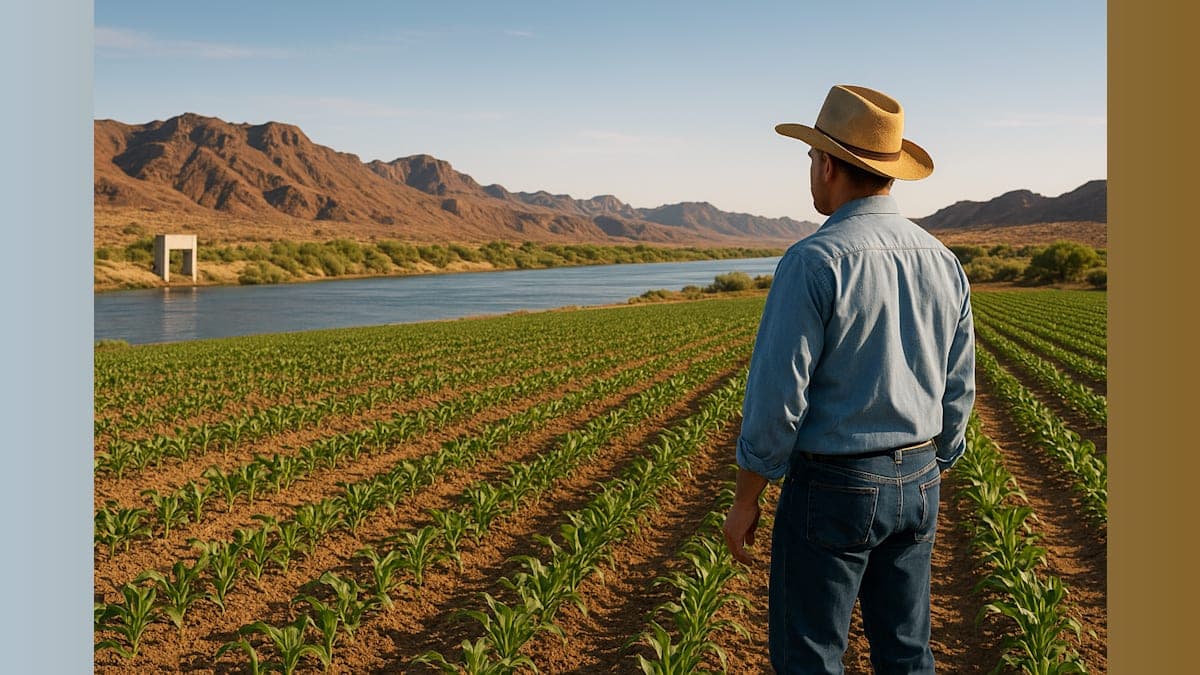
Arizona's agricultural community stands at the forefront of a significant water management decision, as a new proposal to reduce deliveries from the Colorado River would affect the state's farmers before other water users across the region.
The proposal represents a critical effort to stabilize the Colorado River system, which has faced unprecedented challenges in recent years due to prolonged drought conditions and increasing demand. While Arizona farmers would bear the initial burden of reduced water allocations, agricultural leaders view the plan as a potential pathway toward greater long-term certainty for the state's water supply.
The Colorado River serves as a lifeline for Arizona's economy, supporting not only agricultural production but also municipal water supplies and industrial operations throughout the state. Any reduction in deliveries carries substantial implications for farming operations that depend on reliable irrigation to sustain crops in the arid climate.
Despite the immediate challenges posed by reduced water allocations, Arizona's farming community has expressed cautious optimism about the proposal. The prospect of achieving longer-term stability in water deliveries could enable agricultural producers to make more informed planning decisions and investments, potentially offsetting some of the short-term difficulties associated with reduced allocations.
The proposal underscores the complex balancing act facing water managers throughout the Colorado River Basin. Policymakers must weigh immediate economic impacts against the imperative of ensuring sustainable water supplies for future generations. For Arizona, a state whose growth and prosperity have been inextricably linked to Colorado River water, these decisions carry particular weight.
As discussions around the proposal continue, Arizona's agricultural sector remains engaged in the process, advocating for solutions that balance conservation imperatives with the economic viability of farming operations. The outcome of these deliberations will shape water policy in the state for years to come, affecting not only farmers but all Arizonans who depend on the Colorado River's precious resources.